
An imperfect solution
There are two alternative routes to the Strait of Hormuz, but they are only partially covering the losses and are vulnerable to Iranian strikes too.

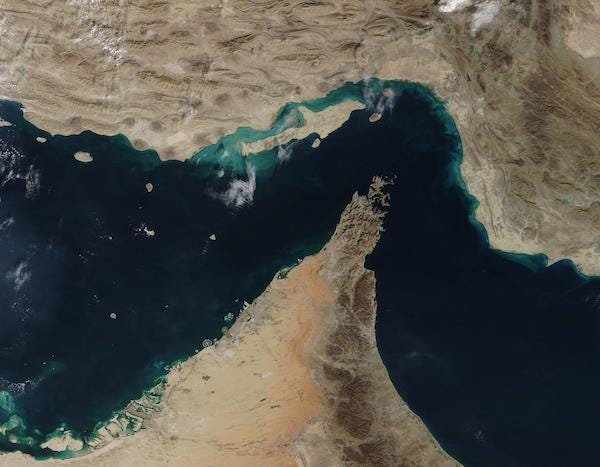
A month into the Iran war, the strait of Hormuz is still mostly closed to shipping traffic. It also doesn’t look like there’s much prospect of it reopening unless there is some eventual resolution to the war itself. As well as causing oil and fuel shortages, especially in Asia - see our other story - it prompted a scramble for alternatives. There are a couple available. But each come with their own risks and problems, and are only a partial solution for the strait’s closure.
The first and most important of these is a link between Saudi Arabia’s eastern oilfields and the Red Sea, the East-West pipeline. The pipeline has reportedly been pumping oil westwards at its virtual capacity of 7m barrels per day worth of crude, with exports via the Red Sea’s Yanbu terminal hitting 5m barrels per day. The rest of the oil transported via the pipeline goes to refineries in the west of the country. This pipeline alone covers off about a third of the disruption from the strait’s closure.
But the route is also vulnerable. Any oil tankers passing from Yanbu to Asia would have to go through the Bab el-Mandeb strait between Yemen and east Africa. This makes shipments potentially susceptible to strikes from the Houthis, who have previously interdicted shipping in the area. That’s now a bigger worry because the Houthis directly joined the war over the weekend after launching an attack on Israel. The attack also raises physical security risks at Yanbu itself.
The other, albeit much smaller, route to get oil around the strait of Hormuz is one the UAE has at its disposal, the Fujirah oil export terminal. The terminal lies just to the east of the strait’s mouth, and has significantly increased its export volumes. Tanker tracking data from Bloomberg show that the terminal is now sending out around 700,000 barrels per day more than the previous year.
But although it’s beyond the strait, Fujirah is still extremely close to Iran, and therefore extremely vulnerable. There have already been strikes on the facility since the war began, forcing temporary shut-downs of loading. Another problem that Fujirah’s position presents is for global shipping itself. The port is one of the world’s most important locations for fuel bunkering, i.e., storing diesel for ships and refuelling them.
Even when working completely, neither of these routes can fully stop what is one of the most significant physical oil supply disruptions in the modern era. We are still talking about somewhere in the range of 10m barrels per day, give or take, being disrupted, depending on the estimate, even with re-routing. Because there’s no guarantee that either route can operate permanently either, there’s the potential for this to get worse as well, especially if or when the conflict does escalate.
Alternative routes will also not help much if actual production facilities end up being damaged, necessitating long and costly prepares. Iran is broadening its strikes to include more of these targets, which is an increasing cause for concern, hence another upward tick in benchmark oil prices. The dance that Donald Trump is trying to do between deal-making and escalatory threats is a familiar part of his repertoire. But if Iran responds in kind, as they are doing now, they could have longer-lasting consequences.
A true-color image of the Strait of Hormuz from the Moderate Resolution Imaging Spectroradiometer (MODIS) on board of NASA’s Terra satellite.